

Rocky: A Case Study
There’s nothing we love more than sharing our furry friends’ success stories! Witnessing the progress of their hard work firsthand is the best reward we could ever imagine. Today we’d like to share Rocky’s inspiring story!
There’s nothing we love more than sharing our furry friends’ success stories! Witnessing the progress of their hard work firsthand is the best reward we could ever imagine. Today we’d like to share Rocky’s inspiring story! Rocky is a 7-year-old lab who had a double (bilateral) femoral head and neck excision (FHO) as a puppy for severe congenital hip dysplasia. He was experiencing chronic pain for over several years as he began aging. He’d been seeing a physical therapist and was taking conventional medications.
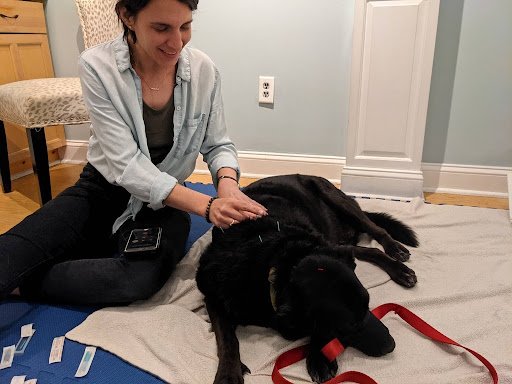
Meet Rocky!
Rocky’s mom had a goal to help ease his pain, anxiety, and fear of being touched on his back end by humans and other dogs. Although he’s full of energy and excitement, the daily pain he suffered from was noticeable. The impact of it really slowed him down. During his initial appointment, we measured Rocky’s lameness to get an understanding of the severity of his pain. His results were an 8 out of 10 lame, with 10 being a non-weight-bearing limb. His score of 8 meant he was very lame on one leg but was still able to place a tiny amount of weight on his fourth leg. But the majority of his total body weight was being supported by only 3 legs.
We treated Rocky with laser therapy and acupuncture and sent him home with a recovery plan. He had a fresh food recipe and an herbal formula for pain and inflammation, which he was able to have with his other medications. A week later, Rocky’s mom emailed us with good news! Rocky was doing great and limping far less! His anxiety had also eased and he was feeling calmer. Rocky loved his food and his mom saw also noticed further improvement once he changed his diet to fresh food. By Rocky’s second treatment, about 2 weeks later, he measured 5 out of 10 lame, which was a great improvement in a short amount of time. He had more energy and a more relaxed disposition.
We now see Rocky once a month for maintenance acupuncture. He is still on a diet of herbs and fresh food. It does our hearts good to see him bounding out of the car and running into the office. The only time he experiences lameness is after a long day of playing hard. Rocky is happy to be able to play more and enjoy being around his loved ones every day without a care in the world!
A Deeper Dive into Naturopathic Medicine
Holistic veterinary medicine takes multiple approaches to prevent, diagnose, and treat the acute and chronic illnesses your pet may experience. Our goal is to promote self-healing, so our focus is always to provide support by helping to restore and establish optimal long-term health and wellness. I rely on the healing power of nature to provide a myriad of services designed to assist in developing and maintaining a healthy lifestyle, including acupuncture, herbal medicine, food therapy, holistic wellness, chiropractic, and end-of-life support.
Holistic veterinary medicine takes multiple approaches to prevent, diagnose, and treat the acute and chronic illnesses your pet may experience. Our goal is to promote self-healing, so our focus is always to provide support by helping to restore and establish optimal long-term health and wellness. I rely on the healing power of nature to provide a myriad of services designed to assist in developing and maintaining a healthy lifestyle, including acupuncture, herbal medicine, food therapy, holistic wellness, chiropractic, and end-of-life support.

Holistic veterinary medicine’s centric focus is the well-being of the whole patient.
Naturopathic medicine is the practice of identifying the underlying causes of illnesses in an effort to avoid the common practice of suppressing symptoms while healing and pursuing the least harmful healing treatment process for your pet. Our customized treatment plans address new and reoccurring symptoms and put an end to ailment cycles by identifying and healing their root causes. Naturopathic Vets are educated and trained in accredited veterinary medical colleges and have further training in holistic medicine modalities. By focusing on whole-patient wellness I provide individualized evidence-based therapies that facilitate the body’s inherent ability to restore and maintain optimal health.
When conventional veterinary medicine training is combined with the in-depth nature and scientific research, the best of both worlds result is the holistic veterinary approach. Holistic medicine takes on a whole, all-encompassing, all-inclusive look at every part of the preventative, diagnostic, and healing process. The centric focus is the well-being of the whole patient. With health and disease prevention at the center of our scope, I address the underlying root cause of the condition creating the disease.
My practice is planted in treating the patient in order to stimulate and support the body’s inherent ability to heal. By addressing my patients naturally - and gently - I’m able to teach my clients how to create a holistic mindset and to create an environment that supports overall patient wellness. This type of commitment aids in the prevention of disease and the maintenance of optimal health.
Let me know how I can care for your pet today!
Is Holistic Allergy Treatment Right for Your Pet?
Spring has officially sprung! Although we’re eager to welcome longer daylight hours, blossoming flowers and plants, and warmer temperatures, allergies are also on the menu. Due to our recent season transition, your pet may be suffering from itchy skin, causing him to constantly bite, scratch, and lick himself for relief. We know you would do anything to end his suffering, but, unfortunately, there’s no magic pill to make it all go away for good.

There is a way to heal the cause of your pet’s allergic reaction…
instead of masking it.
Spring has officially sprung! Although we’re eager to welcome longer daylight hours, blossoming flowers and plants, and warmer temperatures, allergies are also on the menu. Due to our recent season transition, your pet may be suffering from itchy skin, causing him to constantly bite, scratch, and lick himself for relief. We know you would do anything to end his suffering, but, unfortunately, there’s no magic pill to make it all go away for good.
Have you ever considered taking a holistic approach to treating your animal’s allergies?
We welcome you to consider integrating holistic care into your conventional allergy medicine regimen. Holistic allergy treatment is a whole-body approach aimed at supporting your pet’s immune system and getting to the heart of their ailment. It focuses on restoring your pet’s comfort, not just temporarily decreasing his histamine release. Oftentimes, a lifestyle adjustment is needed for your pet, as an allergic reaction is normally due to an immune reaction to food or an environmental allergy. There’s no way to cut corners when it comes to treating dermal allergic reactions such as inflamed, itchy skin. But there is a way to heal the cause of your pet’s allergic reaction instead of masking it with a cocktail of steroids, antihistamines, and antibiotics.
Holistic allergy treatment potentially avoids the undesirable side effects of drugs and hormones by exploring a wide range of options to create an innovative treatment plan for your pet. Alternative treatment options include diet adjustments, acupuncture, and herbal supplementation and are sometimes combined with traditional medicine.
In the meantime, focus on getting your pet outdoors for some physical exercise. Nothing feels better to your pet than direct skin contact with the Earth’s surface! Walking outdoors or using other common grounding techniques can reduce or prevent the cardinal signs of inflammation such as redness, swelling, and pain and can have antioxidant effects.
With time, care, and dedication, your pet can finally get relief and return to a happy, healthy daily routine.
Sign-up to access our mini-class on allergies to learn more about how to provide long-lasting allergy relief for your pet!
Holistic Versus Homeopathic Veterinary Medicine
Should you work with a veterinarian that practices holistic or homeopathic medicine? What may seem like semantics is actually vital to ensure the vet you select shares your desires and preferences for treating your animal. It’s up to you to do the necessary research to determine whether their practice aligns with what you consider to be the best opportunity for your animal’s healing.
Should you work with a veterinarian that practices holistic or homeopathic medicine? What may seem like semantics is actually vital to ensure the vet you select shares your desires and preferences for treating your animal. It’s up to you to do the necessary research to determine whether their practice aligns with what you consider to be the best opportunity for your animal’s healing.

It is my passion
to bring holistic medicine to the forefront of health.
A holistic veterinarian looks at your animal’s medical history, genetics, nutrition, environment, family relationships, stress levels, and other factors that impact their wellbeing. They examine and treat the entire animal, rather than focusing on its individual ailments. Holistic vets have trained in conventional medicine as well as an assortment of treatment modalities including using acupuncture, herbal medicine, Traditional Chinese Veterinary Medicine, food therapy (diet and nutrition), laser therapy, bodywork (massage, myofascial release, spinal manipulation), ozone therapy, homeopathy and more. A holistic vet often chooses to exclusively practice with these holistic modalities. An integrative vet practices using both conventional and holistic practices. An exclusively holistic vet will work with a conventional vet to provide the best possible veterinary care for their patients by using the strengths of both medical systems together.
Herbalism is a subset of holistic medicine. Herbalists use plants (herbs) as medicine to stimulate “the self-healing powers to restore health”. Herbalist Matthew Wood gives an example of goldenseal, a plant that can be used in small doses to stimulate better digestion and improve the health of mucosa. When consumed in large doses as a “natural antibiotic”, it can kill bacteria. Herbs can be used to increase health or as a case of “health management”. It may be more of a goal of biomedicine, therefore the use of herbs may not necessarily be holistic or apply the principles of vitalism.
Homeopathy medicine treats symptoms in your animal with small amounts of substances that would typically cause their symptoms. It too is a subset of holistic medicine. This practice, based on the concept of “like cures like” dates back to Hippocrates in 400 BCE. Dr. Samuel Hahnemann shaped it in the early 1800s. Many vets who use homeopathic medicine pair it with other treatments as part of their holistic approach.
Conventional medicine tends to view the body as a complex machine, foregoing the body’s own healing abilities. Conventional medicine is wonderful for the fields of pathology, radiology, tests such as bloodwork, surgery, all of which we utilize. But this approach often separates the individual from the disease and does not take components like emotions, lifestyle, diet, stress, and the innate ability for the body to fight off disease into consideration.
In his book, The Practice of Traditional Western Herbalism, Mathew Wood states the use of an energetic system is virtually a prerequisite in holistic medicine...that “vitalism looks upon the body as a living being which can correct and cure itself”.
Many principles are the same within the different practices of holistic medicine including vitalism, holism, and the innate ability of the body to heal. Many holistic practitioners believe that good health derives from an equilibrium between the mind and body, which is maintained by a "vital force" that regulates the body's self-healing capabilities. It is my passion to bring holistic medicine to the forefront of health and I take every opportunity to raise awareness of holistic health and wellness benefits. It’s my belief that integrative veterinary medicine should become the standard practice of every vet clinic.
If you would like more information on
how to become an empowered pet owner,
please sign up here to gain access to
My free Naturopawthic mini-course.
How Integrative Veterinary Medicine Can Create Better Mental Health Outcomes
As a holistic vet, I employ a whole-pet approach to therapy treatments for any disease, condition, or discomfort my patients may be experiencing. There are many factors to take into consideration, so I partner with pet parents to determine the type of environment the patient lives in and to learn more about their daily lifestyle. This allows me to gain a thorough understanding of the best-customized treatment plan possible for essential long-term pet care.
As a holistic vet, I employ a whole-pet approach to therapy treatments for any disease, condition, or discomfort my patients may be experiencing. There are many factors to take into consideration, so I partner with pet parents to determine the type of environment the patient lives in and to learn more about their daily lifestyle. This allows me to gain a thorough understanding of the best-customized treatment plan possible for essential long-term pet care.

We must become active advocates for our pets.
Animal mental health is a real issue. In fact, there is often a direct correlation with human mental health. As realistic as anxiety and stress can be in our everyday lives, our pets react to factors in the same environment and often have similar experiences and outcomes. I believe in the power of zoobiquity, which uncovers innovative solutions to the mental and physical challenges animals experience as a result of distress, social change, and other environmental factors. Just like us, our pets are sensitive to energy shifts, making them vulnerable to emotional anxiety, stress, and depression.
We must become active advocates for our pets, leading with compassion and seeking further understanding. It is important to schedule regular visits with medical providers and mental health specialists, as needed. Our pets can also benefit from custom strategies for physical, mental, and emotional health balance and optimization. If you are experiencing mental health challenges, you should also have your pet examined as they are a part of your family and an extension of you. As a result, they can be exposed to the same environmental stressors. A theme of unity between your practitioner and your veterinarian is vital in order to determine whether additional coping mechanisms or treatment is needed for your pet. In the meantime, ensure your pet is getting an herb-rich diet, proper exercise, and rest.
For more information and tips on sustaining
your pet’s mental health, please check out my
Naturopawthic Courses on Herbs for Grief.
Why I Chose Holistic Veterinary Medicine
Optimal health involves far more than aiming for the absence of disease. When we focus on healing and restoring the patient and instead of just correcting the disease, we have learned the power and value of using holistic medicinal practice. I chose to exclusively practice holistic veterinary medicine because I truly believe in focusing my efforts on treating the whole animal. There is a place for all types of medicine in the healing process, which is why I believe in using an integrated approach to medicine, involving holistic and conventional medicine.
Optimal health involves far more than aiming for the absence of disease. When we focus on healing and restoring the patient and instead of just correcting the disease, we have learned the power and value of using holistic medicinal practice. I chose to exclusively practice holistic veterinary medicine because I truly believe in focusing my efforts on treating the whole animal. There is a place for all types of medicine in the healing process, which is why I believe in using an integrated approach to medicine, involving holistic and conventional medicine. I thrive on empowering pet parents to take on a team approach to health by educating them on how medicine should focus on the root cause of physical imbalance. The team consists of the pet, the pet parent(s) and the veterinarian team. While playing a proactive role in their pet’s health and wellness regimen, parents can actively assist in their pet’s healing process. Our team, which includes a holistic vet practitioner and general practitioner vet, hones in on the body’s wondrous natural ability to heal. We create customized treatment plans for each pet to treat and manage ailments and diseases of various types. With a strong support system backing them, the animal will undoubtedly feel the love and dedication toward their renewed health. Great vibes help produce great results.
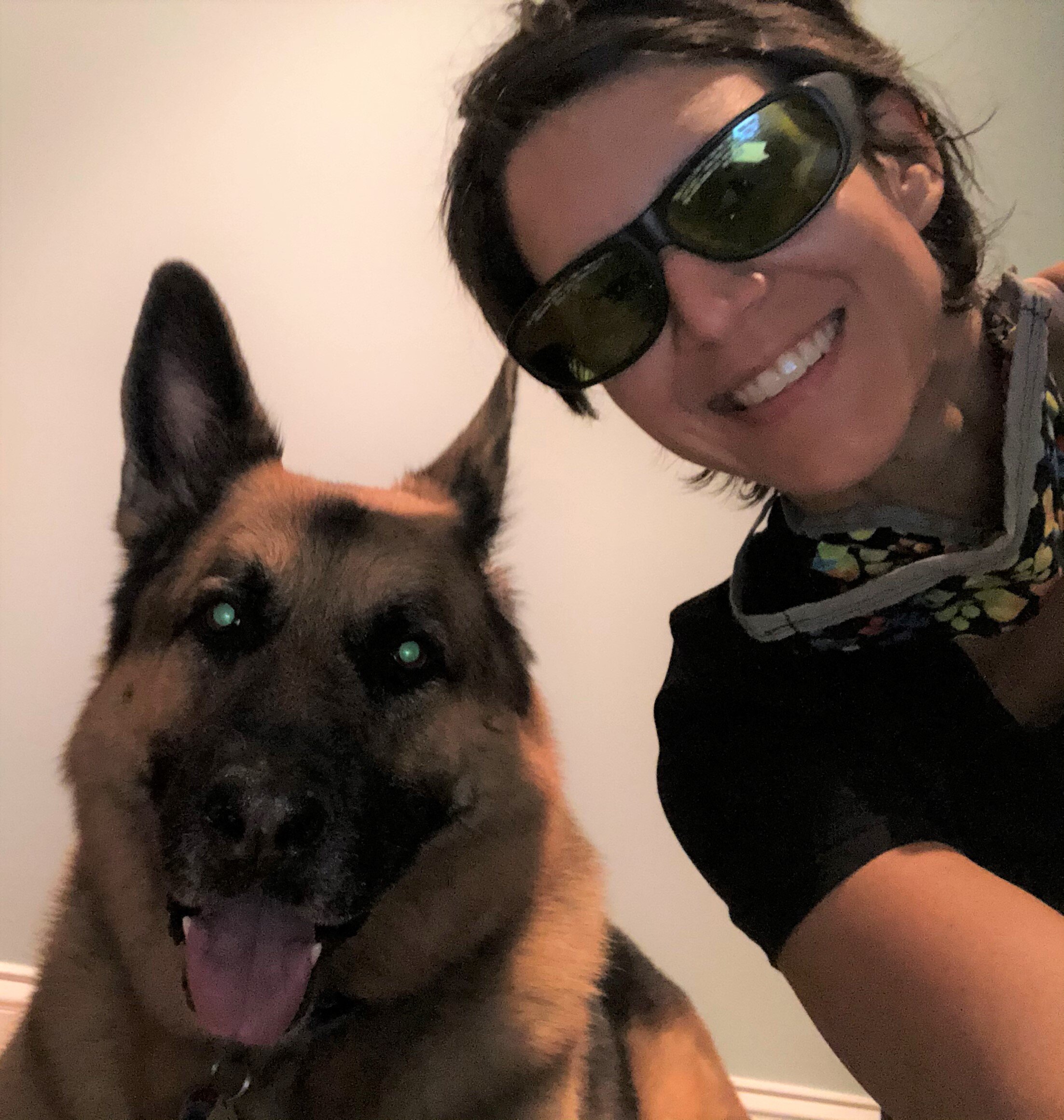
My holistic vet approach stimulates the body to heal using acupuncture, herbal medicine, food therapy (diet and nutrition), laser therapy, body work (massage, myofascial release, spinal manipulation), ozone therapy, and more. Holistic Veterinary Medicine combines appropriate treatments and diagnostics from both holistic and conventional medicines. Integrative veterinary medicine is the combination of all medicines to develop a treatment plan for the individual animal. Conventional medicine tends to view the body as a complex machine, foregoing the body’s own healing abilities. Conventional medicine is wonderful for the fields of pathology, radiology, tests such as bloodwork, surgery, all of which we utilize. But this approach often separates the individual from the disease and does not take components like emotions, lifestyle, diet, stress, and the innate ability for the body to fight off disease into consideration.
As I work to bring holistic medicine to the forefront of health, I take every opportunity to raise awareness of holistic health and wellness benefits. My ultimate goal is to help make integrative veterinary medicine the standard practice of every vet clinic.
If you would like more information on how to become an empowered pet owner, please sign up here to gain access to a free Naturopawthic mini-course.
What is a Registered Herbalist?
Many people have asked me about why I became a Registered Herbalist through the American Herbal Guild (AHG). I wanted to take this opportunity to explain why it was so important to me as a medical professional to work towards and earn this recognition.
Many people have asked me about why I became a Registered Herbalist through the American Herbal Guild (AHG). I wanted to take this opportunity to explain why it was so important to me as a medical professional to work towards and earn this recognition. The AHG offers “Registered Herbalist Membership as a way for herbalists to demonstrate a core level of knowledge and experience in herbal practice that establishes a meaningful standard of competency for themselves, their communities, and other health professionals and institutions. For those who welcome review by their peers as confirmation of their clinical skills, the designation ‘Registered Herbalist’ establishes a recognized level of expertise and commitment to the practice of herbalism.”
My ultimate goal as a veterinarian and herbalist, is to have every medical practitioner integrating all forms of medicine together to create the best approach to health. I spent 4 years in undergrad, 5 years in vet school, and now have over 3000 hours of formal herbal education. This is important because the more professionals recognize the benefit of herbal medicine, the healthier our pets and we will be.
Below I share part of my application essay with you, as I hope to spread the itch to learn more about herbs.
I have had other veterinarians question me on my post graduate degrees, where I obtained this knowledge. Sometimes because they themselves are interested and sometimes because they are questioning me and the validity of the holistic work I do. Becoming a Registered Herbalist would further give a voice to veterinarians using herbal medicine and inspire others. My vision is that every practice will integrate in herbal medicine in the future. Holistic veterinary medicine (alternative and complementary) is growing as a field. I think it is important that veterinarians understand that herbal medicine is not something that you do an internet search on to find an herb to use. That studying herbal medicine to lean not just about the active constituents, but also the traditions, the plants themselves, about our relationship to the plants and how it is a medicine for all. I have numerous students seeing practice with me, from vet school bound college students to vet students. I love being able to show them how valuable herbal medicine is from the traditions to the modern research. As a health professional, I get questions from my clients on my training and where they can find someone like me, an integrative medical practitioner. By becoming a Registered Herbalist, I am able to take that next step to inspire others to use herbal medicine as well as give me more opportunities to teach and reach my goal of getting phytotherapy into every vet practice.
Stuck at home and have to be creative...what are you using a flea comb for?
Spring is here! (Though it did snow on me today while taking dogs out of cars in the parking lot of the office). And with spring comes the weather getting warmer, trees budding, daffodils blooming, pollen blowing around and bugs.
Spring is here! (Though it did snow on me today while taking dogs out of cars in the parking lot of the office). And with spring comes the weather getting warmer, trees budding, daffodils blooming, pollen blowing around and bugs.
I took this picture a few weeks ago when it was 70degrees out and I was able to play with clay outside. With my boys home from school during this period of COVID quarantine, I wanted to inspire them to be creative. My mom is an avid potter (anyone who has been in the office and had tea drank out of one of her mugs @irenepots) and gave me a chunk of clay to play with. It has been a while since I made free hand pottery and as I was coiling, I realized I needed a scraping tool to make the coils stick together. I took out my trusty flea comb and got making pottery!
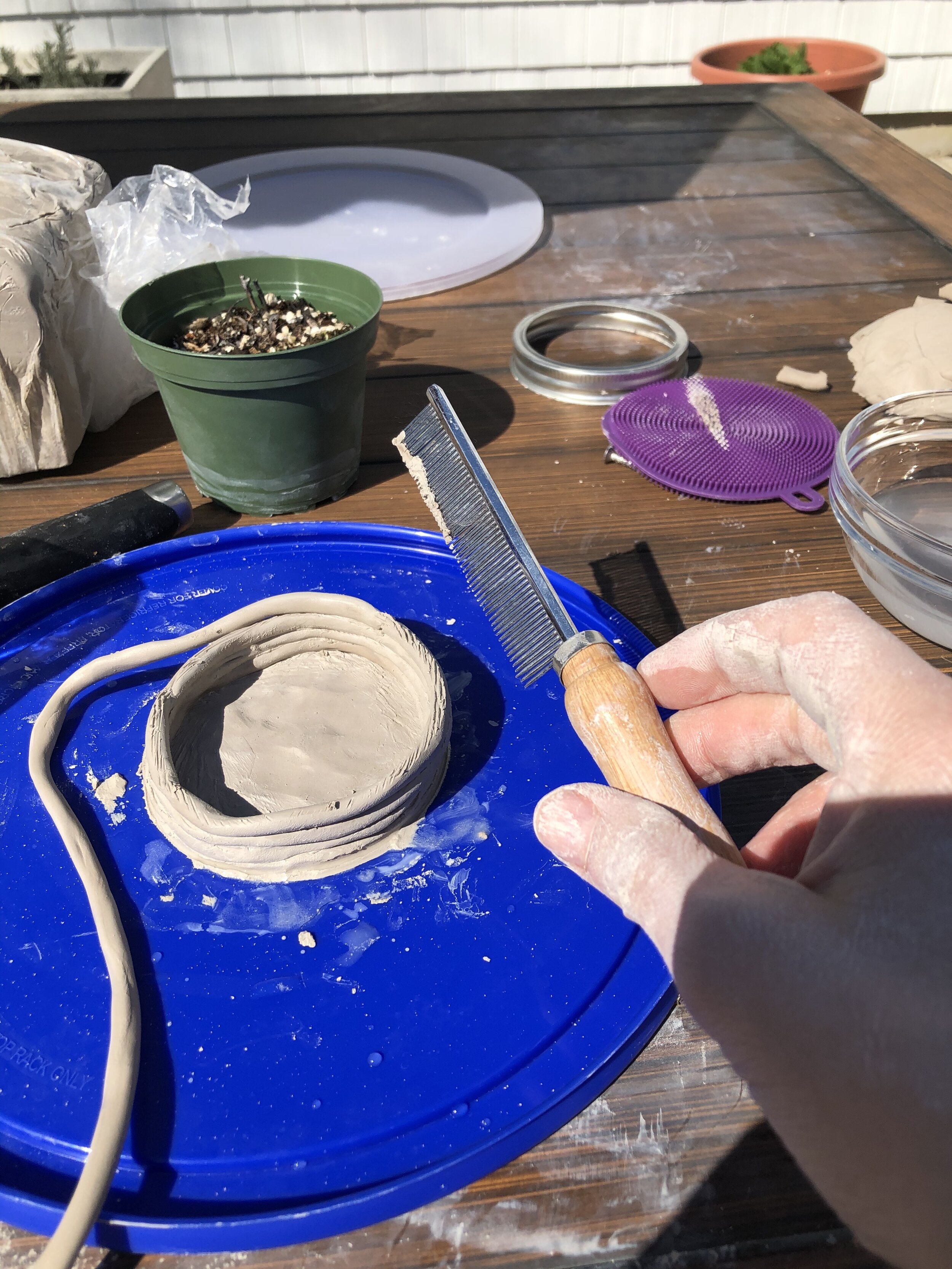
As the weather warms up, I highly advise doing some hand-building of pottery outside. Keep that flea comb near by so that you can run it through the coat of your dog or cat once a week. Along side the use of a flea comb, I recommend using an essential oil based flea and tick repellant such as Wondercide or Flea Flicker by Aroma Dog.
I would love to know what creative ways you have used your flea comb! Leave me a comment below. It is that time of our lives when we need to make use of what we have around the house to finish old projects and create new ones!
What to do to stay relaxed at home
Our whole way of being has pivoted this week. My kids are home from school, I am using telemedicine to see my patients, and Lulu has us home all day interrupting her nap schedule. I, like many, have been going through ups and downs with the information I am seeing on the lack of testing ability, creating this rollercoaster of questions and emotions.
How yoga is helping while we all stay at home
Our whole way of being has pivoted this week. My kids are home from school, I am using telemedicine to see my patients, and Lulu has us home all day interrupting her nap schedule. I, like many, have been going through ups and downs with the information I am seeing on the lack of testing ability, creating this rollercoaster of questions and emotions. When we are stressed, we produce excess cortisol. Like most everything else in life, cortisol in moderation is needed to keep our bodies balanced. How am I staying grounded during these times of flux? Yoga!
My good friend has brilliantly put her yoga school online to help support and keep continuity our lives.
I set up my mat on the living room floor and logged in to do yoga. I quickly realized it was not going to be the normal class of quiet. Lulu quickly decided she wanted to be a part of things.

note the ipad on the floor I am using for my virtual class
Next, my son had homework questions. Just as I was about to get irritated that this lack of space was not helping my cortisol levels, I realized the energy I was emitting was what was indeed drawing them to be right next to me. They both stayed during my entire practice, which did have math homework questions intermixed in.
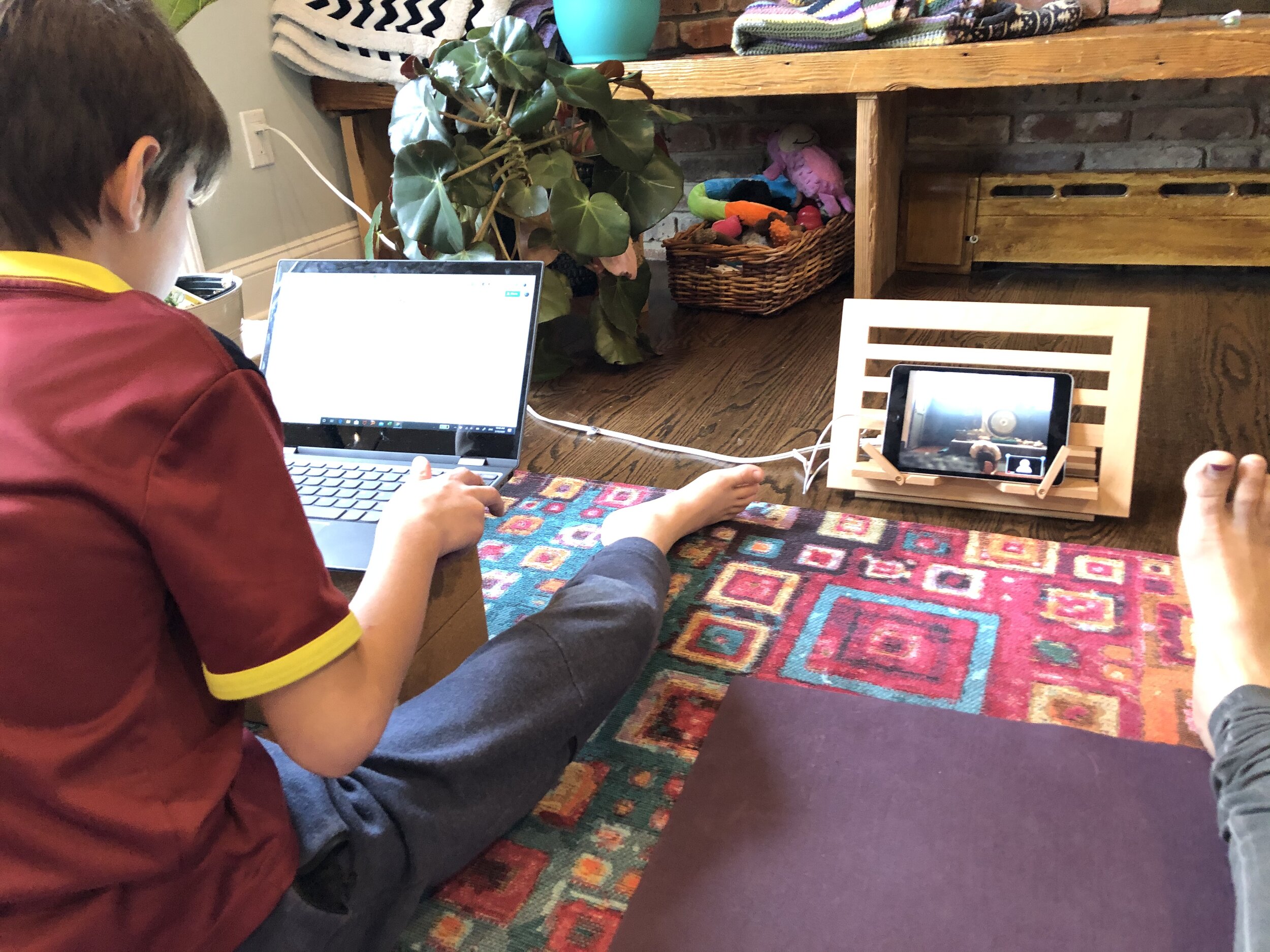
Yoga builds strength, stability and flexibility of not just our bodies, but our minds and spirit as well. The Harvard School of Medicine recommends yoga as a way to reduce stress from anxiety resulting from the current COVID-19 social issues. I encourage you to give it a try when we need to be super flexible with ever changing schedules and social norms. Let me know how your home yoga practice or whatever you are doing to keep your stress managed during these times..
What am I doing to boost my immune system
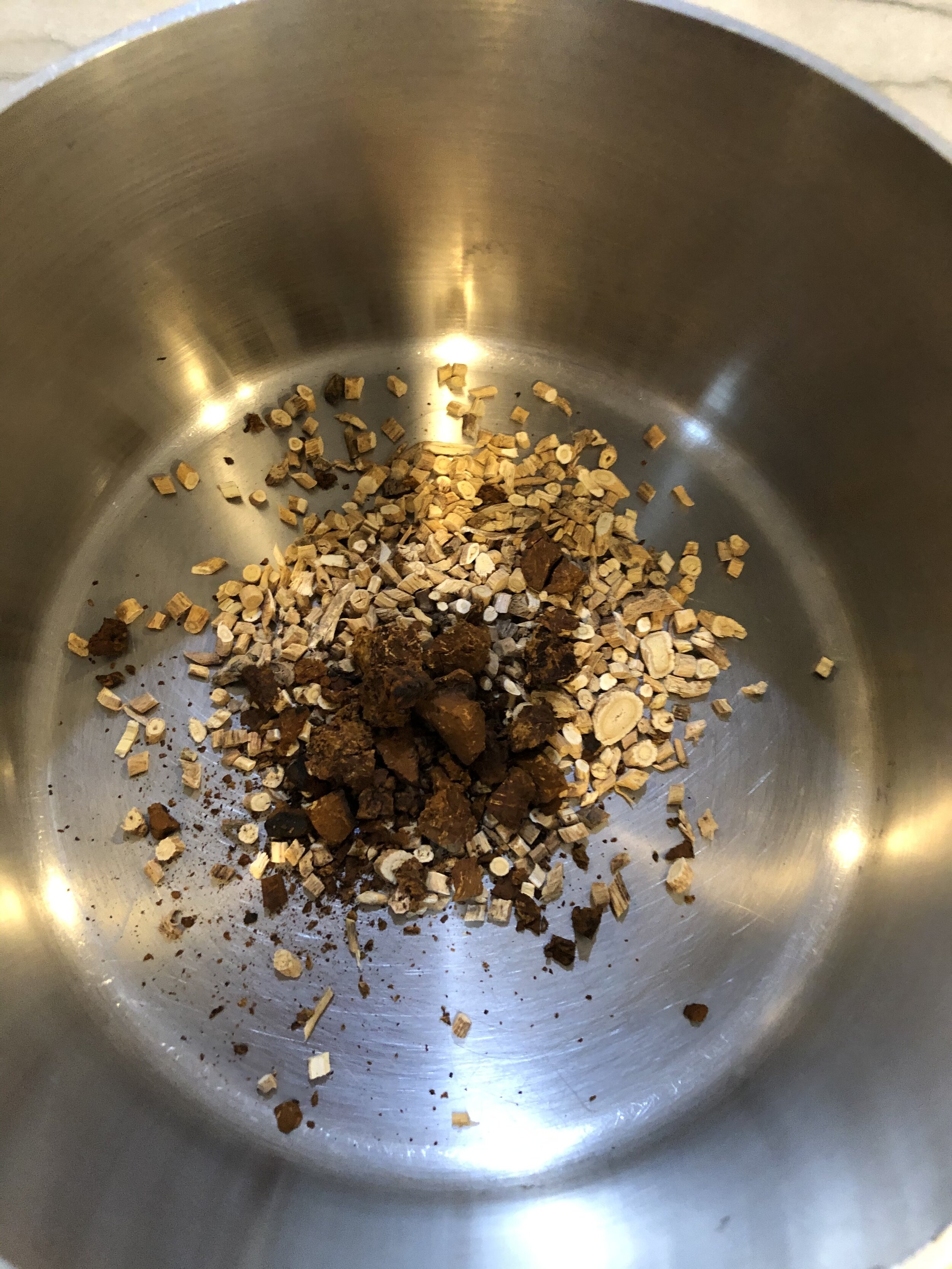
Astragalus root and dried chaga mushroom before a long steep
I have taken several classes since the outbreak of COVID-19 on how to manage symptoms and prevent becoming infected with it. The last class was given by Guido Mase, who is a brilliant herbalist. For the prevention phase, he recommended reishi and other medicinal mushrooms along with astragalus. I happened to have both at home so I decided to make up a batch of herbal mushroom stock!
I combined mushrooms (reishi, shiitake) with dried astragalus root and simmered them for a long time (like hours). It takes a while to break up the chitin in the cell walls of the mushrooms to release the ever beneficial polysaccharides which help to modulate your immune system. Reishi mushroom benefits your immune system, calms your nervous system and assists to balance out your HPA axis (think of adrenal fatigue). Astragalus root tonifies Qi (your vital life force). After a long simmer for a few hours, I added fresh chopped ginger and scallions. Both are warming, keep your circulation moving, and calms the stomach. Scallions soothe the liver and move stagnation. Feel free to share some (meaning a teaspoon to a few tablespoons) with your dog or cat, but leave out the scallions please. For yourself, drink a few warm cups a day and enjoy! If you make up a batch post below and let me know how you like it!
For those of you interested in learning more, the replay of the webinar can be found @BotanicWise on facebook.

What is Burdock Root?
I went to my local health food market the other day, and to my surprise found burdock root! It is not something you will find in your local grocery store, though you will most likely find it in an asian market. Burdock root is a gentle acting medicinal plant used in Europe, Asia and the Americas. I thought it would be fun to explore the benefits of burdock.
I went to my local health food market the other day, and to my surprise found burdock root! It is not something you will find in your local grocery store, though you will most likely find it in an asian market. Burdock root is a gentle acting medicinal plant used in Europe, Asia and the Americas. I thought it would be fun to explore the benefits of burdock.
Burdock (Articum lappa) is an incredible herb. I use it almost daily for my patients in the form of tinctures or herbal powder. As a medicinal herb it is cooling in nature. It is used for skin problems. It improves digestion. Other uses of burdock root that has been reported in the literature include treating chronic diseases such as cancers, diabetes and AIDS. However, it is also essential to be aware of the side effects of burdock including contact dermatitis and other allergic/inflammatory responses that might be evoked by burdock.
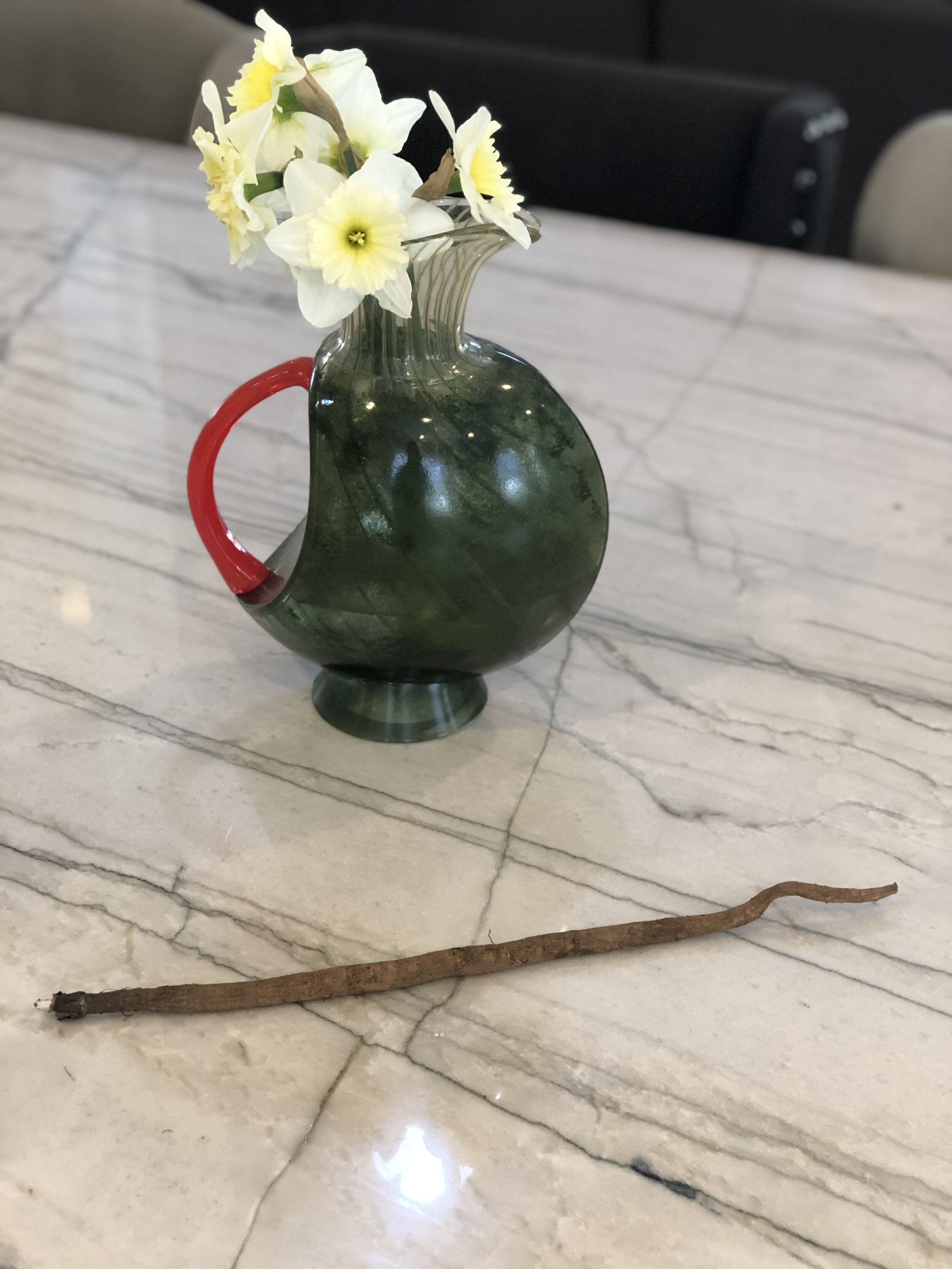
one burdock root on my counter with the daffodils I picked from my yard
Now that I have this medicinal root in my kitchen, I have to decide how to prepare it. To be honest, I have never cooked with burdock. So I did what everyone else does when they don’t know how to cook something. I looked it up and found what seems to be a simple recipe I found on spruceeats.com.
Ingredients
1/2 lb gobo (burdock root)
1/4 lb carrot (peeled and cut into short and thin strips)
1 1/2 tbsp mirin
1 tbsp sugar
1/2 tbsp sake
1 tbsp soy sauce
1 tsp sesame seeds
2 tbsp vegetable oil
Steps to Make It
Peel the gobo’s skin with a peeler (the traditional method is to scrape the skin off with the back of kitchen knife - Sasagaki, between shaved and sliced). Then diagonally slice thin strips so that each piece is about 2-inches in length. Then collect some of the slices and cut into thin matchbox strips.
Soak the gobo strips in water for a while and drain well. You can add a drop of vinegar to the water if desired. Change the water several times until it is clean. Leave the gobo in the water until you are ready to cook.
Cut the carrots into matchbox strips.
Heat vegetable oil in a frying pan, and fry gobo for a couple of minutes.
Add carrot strips to the pan and stir-fry them.
Add sake, mirin, and sugar and stir-fry until the liquid is gone.
Season with soy sauce and stir-fry well.
Turn off the heat.
Sprinkle sesame seeds.
Enjoy!
Obviously don’t feed this recipe to your pet as it contains alcohol.
I asked a fellow holistic vet and herbalist Dr. Connie DiNatale how she prefers to prepare her burdock root. She recommends making pickled burdock t for high blood pressure and head aches, as is used in Japanese traditional medicine. Cooking is a fun way for us to get to know our food that is medicine. If you would like to learn more about how burdock helps, us as well as our pets, let me know in the comments section below. And remember as always, these statements do not replace the medical advise of your doctor or veterinarian.
FDA Disclaimer: The statements on this website have not been evaluated by the Food and Drug Administration. The products presented on this website are not intended to diagnose, treat, cure, or prevent any disease.

Support during the times we live in
I am looking to take this opportunity to hold space for all of us, pet owners or not. If we are going to be quarantined at home, let’s use this opportunity to learn! Yes, those of you who know me, know I am a lifelong student. Let’s jump in!
I am looking to take this opportunity to hold space for all of us, pet owners or not. If we are going to be quarantined at home, let’s use this opportunity to learn! Yes, those of you who know me, know I am a lifelong student. Let’s jump in!
As a pet owner, what are the burning questions you have? What do you wish your vet had told you? What do you want to know about holistic medicine? I will be using this space to provide an education platform on everything from conventional veterinary medicine to the use of herbs and ways to process grief.
Let’s take this time to make lemons into lemonade. Knowledge is power and an empowered pet owner is the best one to be.